Course Overview
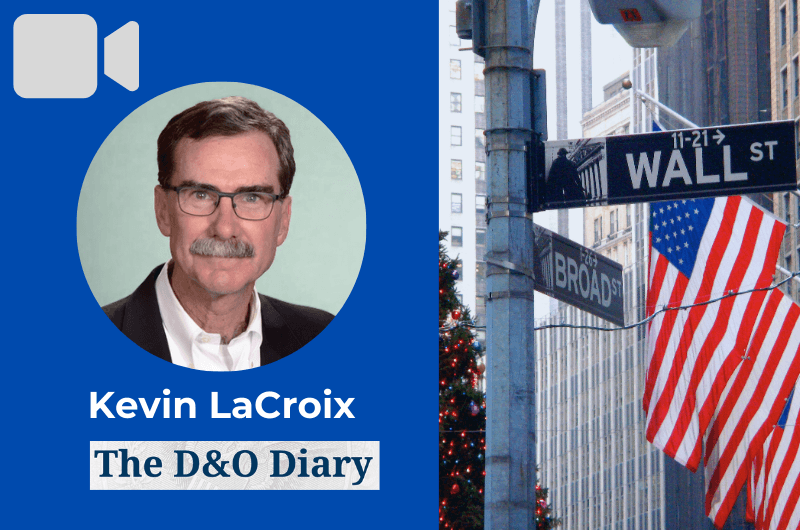
In his first masterclass on U.S. securities exposure, Kevin LaCroix introduced the fundamental legal framework governing securities litigation in the United States.
In this advanced second masterclass, Kevin goes beyond the foundations to explore some of the most important topics shaping today's securities litigation environment. Participants will gain practical insights into SEC enforcement actions, Department of Justice (DOJ) criminal proceedings, securities litigation dynamics, common claim scenarios, emerging litigation trends, cybersecurity disclosure requirements, and the critical role of indemnification.
Drawing on more than 35 years of experience analyzing securities claims and advising D&O professionals, Kevin explains not only how these exposures arise, but also why certain companies become targets and what underwriters, brokers, claims professionals, lawyers, and risk managers should be watching for.
Whether you are underwriting U.S.-listed companies, managing international D&O programs with U.S. exposure, handling D&O claims, or simply looking to deepen your understanding of the world's most active securities litigation environment, this masterclass provides practical knowledge that can immediately enhance your risk assessment and decision-making.
What You Will Learn
By completing this masterclass, you will:
Understand how SEC investigations and DOJ criminal proceedings interact with private securities litigation.
Learn how securities class actions develop and why most cases settle.
Identify the most common allegations that trigger securities claims.
Recognize the characteristics that make certain companies more vulnerable to litigation.
Anticipate emerging sources of future securities claims.
Understand the D&O implications of SEC cybersecurity disclosure requirements.
Appreciate the strategic importance of corporate indemnification.
Strengthen your ability to assess U.S. securities exposure from an underwriting, broking, claims, or risk management perspective.
Course Modules
Module 1: Review of the Foundational U.S. Securities Laws
A practical refresher on the legal framework underpinning securities litigation in the United States. Kevin reviews the Securities Act of 1933, the Securities Exchange Act of 1934, state securities laws, and common law fraud principles, explaining how each can create potential liability for companies, directors, and officers.
Key topics covered:
The Securities Act of 1933 ("The '33 Act")
Section 11 and Section 12 liability
Control Person liability under Section 15
The Securities Exchange Act of 1934 ("The '34 Act")
Rule 10b-5 securities fraud claims
Control Person liability under Section 20(a)
Proxy statement liability under Section 14
State securities laws ("Blue Sky Laws")
Common law fraud liability
Why it matters: Understanding the legal foundations is essential for assessing securities exposure, evaluating claims, and underwriting U.S.-listed risks.
Module 2: SEC Enforcement Actions and Department of Justice (DOJ) Criminal Prosecutions
Private shareholder lawsuits are only part of the exposure. This module examines how the SEC and the Department of Justice investigate and prosecute securities-related misconduct, including accounting fraud, insider trading, and other regulatory violations.
Key topics covered:
SEC enforcement powers and procedures
Administrative proceedings versus federal court actions
Typical SEC investigations
Insider trading allegations
Accounting fraud cases
DOJ criminal prosecutions
Deferred prosecution agreements
Officer and director bars
The interaction between private litigation, SEC investigations, and criminal proceedings
Why it matters: Companies can simultaneously face shareholder litigation, SEC investigations, and criminal proceedings, creating significant financial, regulatory, and reputational exposure.
Module 3: Litigation Dynamics
How does a securities class action actually unfold? Kevin walks through the typical life cycle of a securities lawsuit—from a stock price drop and plaintiff recruitment to motions to dismiss, discovery, settlement negotiations, and trial.
Key topics covered:
How securities class actions begin
The role of plaintiff law firms
Lead plaintiff selection
Jurisdiction and venue considerations
Motion to dismiss strategies
Discovery and class certification
Settlement dynamics
Why most securities cases settle before trial
The impact of defence costs on D&O insurance limits
Why it matters: Understanding litigation dynamics helps D&O professionals evaluate claim severity, defence costs, settlement drivers, and insurance implications.
Module 4: Common D&O Securities Types of Claims
Explore the allegations most frequently seen in U.S. securities litigation, including accounting irregularities, financial misstatements, earnings disappointments, regulatory investigations, operational failures, and event-driven claims.
Key topics covered:
Accounting and financial reporting issues
Financial restatements
Earnings misses and disappointing results
Product safety and efficacy allegations
Regulatory investigations
Event-driven litigation
Operational failures
Data breaches and cyber incidents
Industry-specific securities claims
Why it matters: Recognizing common claim patterns helps underwriters identify red flags before a claim occurs.
Module 5: Characteristics That Make Companies Susceptible to Securities Litigation
Why are some companies sued repeatedly while others rarely face claims? Kevin examines the characteristics most closely associated with securities litigation and explains how these factors can be used to assess risk.
Key topics covered:
Company size and market capitalization
IPO-related exposure
Industry-specific litigation trends
Volatile share prices
Aggressive management teams
Insider trading concerns
Customer and supplier concentration
Mergers and acquisitions activity
Business model vulnerabilities
Why it matters: This module provides practical underwriting insights that can improve risk selection and portfolio management.
Module 6: Sources of Future Litigation
A forward-looking discussion of the trends that may generate the next wave of securities claims. Kevin explores emerging risks that directors, officers, and D&O professionals should monitor closely.
Key topics covered:
Inflation and economic uncertainty
Rising interest rates
Supply chain disruptions
Geopolitical tensions
Climate-related risks
Privacy and cybersecurity concerns
Regulatory developments
Artificial intelligence (AI)
Emerging disclosure obligations
Why it matters: Tomorrow's claims often emerge from risks that are visible today. Understanding these trends can provide a valuable underwriting advantage.
Module 7: SEC Cybersecurity Disclosure Guidelines
Cybersecurity has become a major boardroom issue and an increasing source of D&O exposure. This module analyzes the SEC's cybersecurity disclosure requirements and the potential litigation risks arising from incident reporting and governance disclosures.
Key topics covered:
SEC cybersecurity disclosure rules
Material cybersecurity incident reporting
Four-day disclosure requirements
Cybersecurity risk management disclosures
Board oversight responsibilities
Governance expectations
Potential securities litigation exposures
Practical compliance challenges
Why it matters: Cyber-related disclosures are becoming an increasingly important area of scrutiny for regulators, investors, and plaintiff firms.
Module 8: The Importance of Indemnification
D&O insurance is only one component of executive protection. Kevin explains why corporate indemnification remains a critical safeguard for directors and officers and discusses how indemnification and D&O insurance work together.
Key topics covered:
The role of indemnification in executive protection
Indemnification versus insurance
Corporate bylaws and indemnification rights
Separate indemnification agreements
Practical considerations for directors and officers
The relationship between indemnification and D&O insurance programs
Why it matters: Understanding indemnification is essential for evaluating executive protection and the practical operation of D&O insurance programs.
Who Should Attend?
This masterclass is designed for:
D&O Underwriters
Financial Lines Underwriters
Insurance Brokers
Claims Professionals
Corporate Lawyers
Risk Managers
Corporate Insurance Buyers
Anyone seeking a deeper understanding of U.S. securities litigation and D&O exposure
Included Materials
8 On-Demand Video Training Modules
Downloadable Presentation Slides for Each Module
Lifetime Access to All Course Materials
Access Across Desktop, Tablet, and Mobile Devices